Do Touchless RV Wash Products Really Work?
Do touchless RV wash products clean as well as a hand wash? Learn where touchless cleaners work, where they fall short, and what RV owners should know.
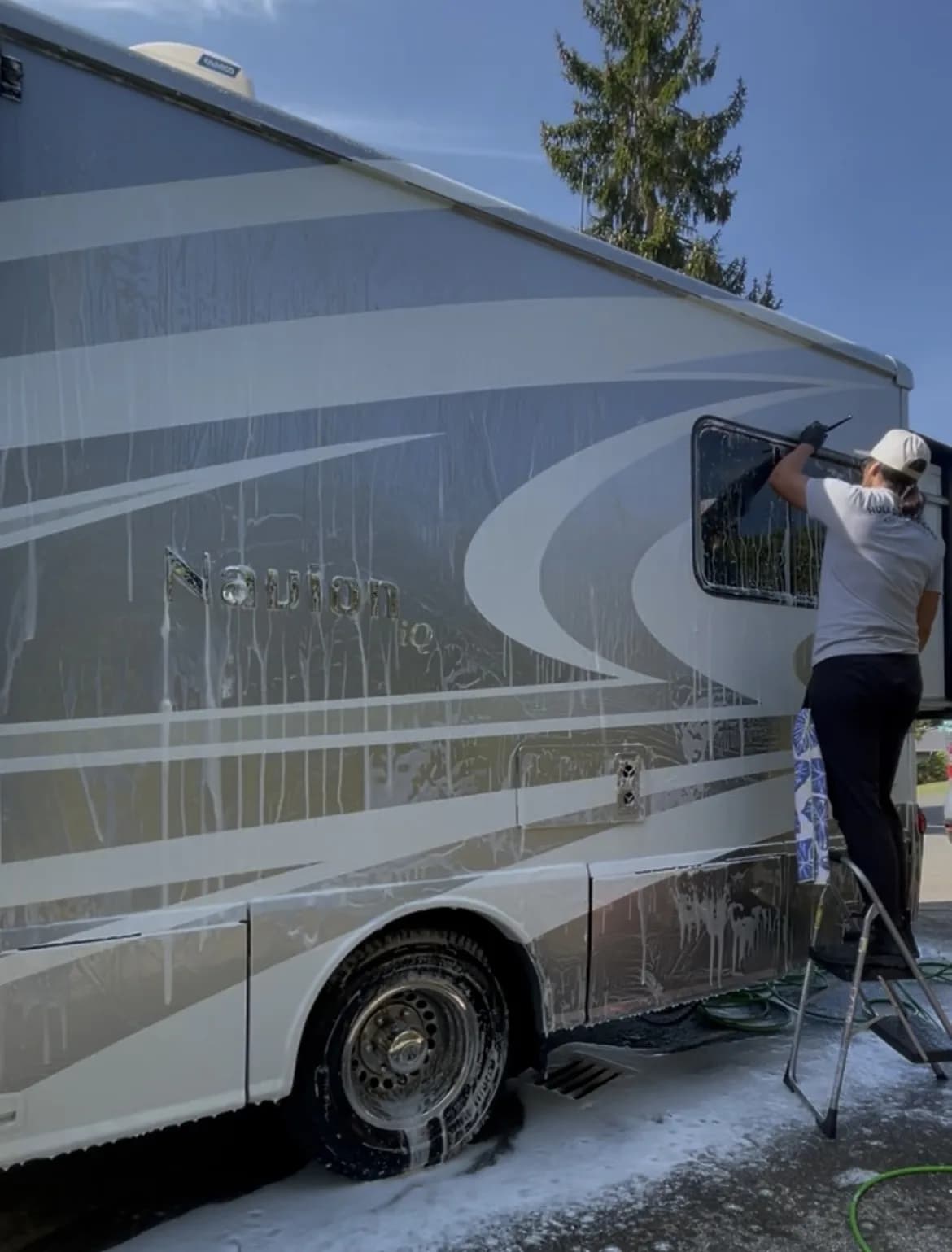
Touchless RV wash products sound great in theory: spray the product on, let it work, rinse it off, and skip the scrubbing.
But do they actually clean an RV as well as a traditional hand wash?
In most cases, not really — especially if your RV has accumulated road grime, black streaks, bugs, dirt, or months of Pacific Northwest buildup.
Touchless products can absolutely have a place in RV cleaning, but they're generally better thought of as a pre-wash or maintenance tool than a replacement for a thorough hand wash.
Why Touchless Washing Has Its Limits
The biggest challenge with touchless cleaning is simple: there's no physical agitation.
A good RV wash doesn't just rinse away loose dirt. A wash mitt physically works across the surface to remove the thin layer of grime that tends to cling to gel coat, clear coat, trim, and other exterior surfaces.
That becomes especially important on RVs because they have a lot of surface area, and many rigs spend weeks or months exposed to rain, road film, tree debris, bugs, mildew, and other contaminants.
You can spray plenty of cleaner on that surface, but some dirt simply needs a little elbow grease.
I've also had customers tell me they've tried touchless RV wash products themselves and were disappointed by the results. The rig may look cleaner from a distance after rinsing, but once you get close, there's often still grime left behind.
If a Touchless Product Works Really Well, Pay Attention to the Chemistry
There's another side to the equation.
Without a wash mitt providing mechanical cleaning, a touchless product has to rely more heavily on chemistry and water pressure to do the work.
That doesn't automatically mean a touchless cleaner is bad for your RV. There are mild products on the market, and plenty can be used safely when their instructions are followed.
However, stronger touchless cleaners often rely on more aggressive cleaning chemistry to break down road film, grease, and grime.
That stronger cleaning ability can also reduce or remove some waxes and sealants over time.
So there's a bit of a tradeoff:
A gentler touchless product may not remove everything. A stronger product may clean better, but you should be more mindful of the protection that's on the RV afterward.
That's why I generally prefer using appropriate cleaning products along with a thorough hand wash rather than trying to make chemistry do all of the work.
A Hand Wash Does Something Else That's Easy to Overlook
There's another benefit to washing an RV by hand that has nothing to do with how shiny it looks afterward:
You actually get a close look at the RV.
When I'm washing a customer's rig, I'm working my way around essentially every exterior surface. That gives me an opportunity to notice things the owner may not see from the ground or during normal use.
I've pointed out things like:
- Oxidation beginning to develop
- Cracks or damage in gel coat
- Deteriorating exterior surfaces
- Areas that may need additional attention
I'm not doing a formal RV inspection, but spending several hours working inches away from the exterior naturally gives you a much better view of what's going on than spraying the rig from several feet away and rinsing it off.
For something as expensive as an RV, I think that's valuable.
Does That Mean You Should Never Use a Touchless RV Wash?
Not at all.
If your RV isn't particularly dirty, a touchless product can be a convenient way to knock off dust, pollen, or lighter contamination between more thorough washes.
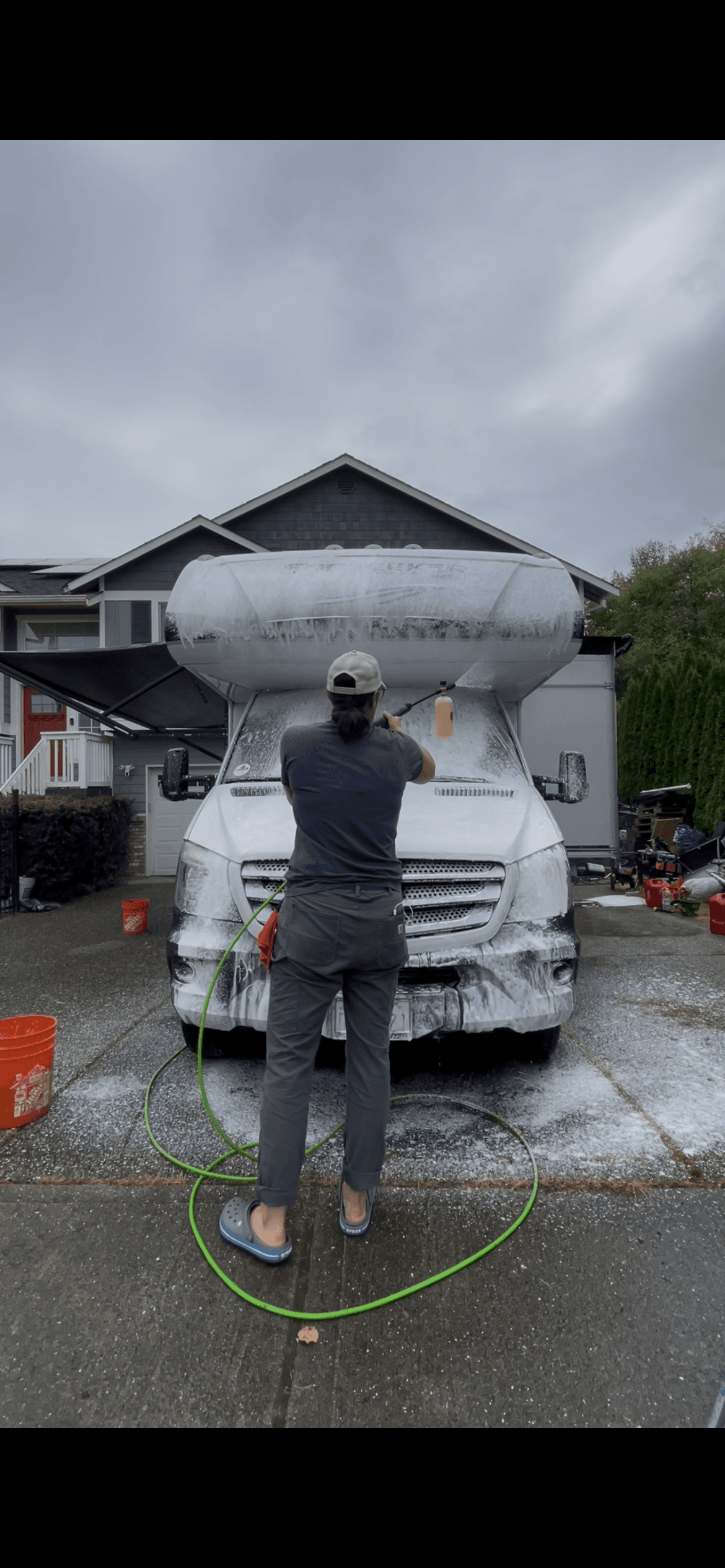
A touchless pre-wash can also be useful before hand washing because removing some of the loose dirt first means there's less contamination being moved around during the contact wash.
Where I'd be skeptical is the idea that a spray-on, rinse-off product will consistently provide the same result as thoroughly hand washing an RV, particularly when the rig is actually dirty.
Sometimes the old-fashioned method is still the best one.
The Bottom Line
Touchless RV wash products aren't necessarily a gimmick, and using one probably isn't going to hurt your RV when it's an appropriate product being used according to its directions.
Just have realistic expectations.
If the product is mild, it may leave stubborn grime behind. If it's strong enough to remove heavy contamination without any agitation, it's worth understanding what chemistry you're putting on the RV and whether your wax or protective layer may need attention afterward.
For a genuinely thorough cleaning?
Nothing beats a good hand wash and a little elbow grease.
At Hula Girl RV Care, our exterior services are done by hand so we can thoroughly clean the RV while getting an up-close look at the condition of the exterior along the way.
Frequently Asked Questions
Are touchless wash products safe for RVs?
Many can be used safely when they're appropriate for RV surfaces and used according to their directions. Stronger cleaning chemistry may reduce or remove some waxes and sealants over time.
Can you wash an RV without scrubbing it?
A touchless product can remove dust, pollen, and loose dirt, but stubborn road grime, bugs, black streaks, and buildup usually need physical agitation from a wash mitt.
Can touchless RV wash remove black streaks?
Some stronger touchless products may reduce black streaks, but results vary. A thorough hand wash is more dependable, and stronger cleaners may affect existing wax or sealant.
Mobile RV Care
Want professional help caring for your RV?
Hula Girl RV Care comes to you for thorough exterior cleaning, protection, and a finish you can feel good about.
Get Your Free QuoteRelated Articles
Can You Use Dawn Dish Soap on an RV?
Can you use Dawn dish soap on an RV? Learn when it makes sense, when to use a pH-neutral wash soap, and what to apply afterward.
Read article